To read a review of America And Its Guns: A Theological Expose go to DonQuixoteofRome.blogspot.com.
There is a theology connected to the Cult of the Gun that is so pervasive in our American society that it is difficult to see unless one looks with new eyes through a different lens.
How do we, if we are indeed Followers of the Way, justify the Gun Culture?
Thursday, September 25, 2014

Sunday, September 14, 2014
A Morning Prayer
"From Psalm 51
Open my lips O Lord,*and my mouth shall proclaim your praise.
Create in me a heart, O God *
and renew a right spirit within me.
Cast me not away from your presence *
and take not your holy Spirit from me.
Give me the joy of your saving help again *
and sustain me with your bountiful Spirit.
Glory to the Father, and to the Son, and to the Holy Spirit : *
as it was in the beginning, is now, and will be forever. Amen"
(The Book of Common Prayer page 137. Church Publishing Incorporated, New York
Saturday, September 13, 2014
Churches Can't Go Back to Business As Usual
This originally appeared on Sojourners web site at: http://sojo.net/blogs/2014/09/02/after-summer-crisis-churches-cant-go-back-business-usual
After a Summer of Crisis, Churches Can't Go Back
to Business As Usual
by Tom Ehrich
09-02-2014
When churches conclude their summer hiatus and resume
full-scale ministries this week, much will have changed from a year ago —
outside their doors.
Conditions might have changed inside, too. But
it is the world outside that demands fresh attention in mission and ministry.
Ferguson, Mo., has happened, revealing
disturbing trends in law enforcement and deep fault lines between white
experience and black experience.
Russia’s aggression against Ukraine happened,
threatening a resumption of dangerous tensions between Moscow and Western
democracies.
The Islamic State of Iraq and Syria happened,
raising the dreaded specter of a take-no-prisoners war on modernity, reason,
progress, women and other faiths.
The 113th Congress happened, mired in systemic
dysfunction, with one party determined to cripple a black president and to
channel more wealth to the wealthy.
The Koch brothers and their megabuck cronies
happened, changing the face of electoral politics with unprecedented infusions
of cash and ideological vitriol.
The two-tier economy happened, with one tier
doing extraordinarily well and a much, much larger tier falling further behind,
leaving despair among all age groups.
Border wars between terrified migrants and
swaggering white men bearing arms against children happened, threatening
America’s true core value as a welcoming nation promising freedom.
These outside-the-walls developments have
little to do with the usual church fussing — except to say that it’s time for
church people to stop their usual fussing.
This year will be a test. Can American
Christianity get over itself and truly serve a desperate society? If churches
do nothing more than business as usual — the mega getting more mega in splendid
isolation, the struggling trying to hang on by not offending anyone — the
Christian enterprise in America will have declared bankruptcy.
That means the mega must abandon their prideful
isolation. They must put their considerable resources to work in making this a
better nation for all citizens, not just a more comfortable home for
like-minded evangelicals.
Progressive and conservative churches must put
down their ideological swords and work together among people walking by their
closed doors.
Black churches must dare to teach whites what
black life is like; they must push beyond mutual suspicion to forge alliances.
Politicians won’t provide jobs and dignity; gospel-bearing believers must do
so.
Roman Catholic churches must dare to become
neighborhood centers of peace and justice — not jealous outposts of a global
brand, but neighbors helping neighbors.
Now is the time for churches set among the poor
to get radically engaged in securing employment, feeding and sheltering, and
standing in solidarity with the “wretched refuse” coming to our shores.
Now is the time for churches set among the
shrinking middle class to stop remembering the 1950s and to see 2014 for what
it is: a battle zone in a great class war between the rich and everyone else.
Now is the time for churches set among the
wealthy to stop begging for scraps to improve facilities and echo Jesus, who
commended radical generosity, radical sharing, radical self-denial.
Our nation needs faithful servants who have the
boldness that Jesus commended. The year since our last fall homecoming shows a
nation in deep distress. Time for us to step up.
Tom Ehrich is a writer, church consultant and Episcopal priest based in
New York. He is the president of Morning Walk Media and publisher of Fresh Day
online magazine. His website is www.morningwalkmedia.com.
Follow Tom on Twitter @tomehrich. Via Religion News Service.
Image: josefkubes / Shutterstock.com
Monday, September 8, 2014
Why the Church?
In a post on The Sub-Dean’s Stall the Revd Canon Robert Hendrickson
wrote a response to a question he received. The question was, “Why the Church?”
His reply can be read at: http://thesubdeansstall.org/2014/08/22/why-the-church/#comment-8788
A response to Robert Hendrickson's post by Tom Poelker that I found interesting and appropriate
for today’s Church follows:
“Robert,
I think that you have missed the fundamental nature of church.
The English language is part of the problem, because “church” does not
at all reflect the scriptural term, “ecclesia”, whose closest English
equivalent might be “gathering”. Individual Christians are gathered into
supportive groups.
While individual Christians are called to follow “The Way” which both
is and was taught by Christ, they gather together for the needed mutual support
for living that holy way in a very unholy world, where instead of loving their
neighbors they are encouraged to compete with them, to win more than anyone
else, to take care of themselves and their own, rather than loving their
neighbors and caring for those in any kind of need. Living as a Christian is
simply difficult in a world which worships wealth and entertainment instead of
the eternal, loving God.
The reason why there is church is to be the support group for those
attempting to make their individual lives conform to the way of Jesus taught in
the Christian Scriptures. You say many things about the means the church has
created and transmitted to do this task, but I ask you to distinguish the end
from the means. The church is a community in support of those engaged in the
hard work of living according to Jesus. That is its purpose.
To value and evaluate church correctly we need to be clear that its
purpose is not to maintain itself as an institution or to act upon society or
to perpetuate specific forms of prayer, but to support individuals, We should
leave the church buildings not feeling that we have served God but feeling that
God and our fellows have provided support in what we know is difficult, living
every moment of our lives as Christian.
Why
Church? So that people are strengthened in Christian living.”
I have only one small disagreement with the response. I do believe that the church should "... act upon society...". It, among other institutions, can have a positive affect on our society and is part of the church's responsibility in the world.
I have only one small disagreement with the response. I do believe that the church should "... act upon society...". It, among other institutions, can have a positive affect on our society and is part of the church's responsibility in the world.
Sunday, September 7, 2014
IMMIGRATION REFORM
The letter posted below originally appeared in the (Syracuse) Post-Standard on August 26, 2014. The article can also be found on the web site of Interfaith Works of Central New York. (visitinterfaithworkscny.org)In addition to the scripture mentioned in the article the following from James seem appropriate to the ideas expressed here.
"Pure, unspoiled religion, in the eyes of God our Father is this; coming to the help of orphans and widows when they need it, keeping oneself uncontaminated by this world.
My brothers (and sisters), do not try to combine faith in Jesus Christ, our glorified Lord, with the making of distinctions between classes of people.
Well, the right thing to do is to keep the supreme law of scripture: you must love your neighbor as yourself; but as soon as you make distinctions between classes of people, you are committing sin, and under condemnation for breaking the law."
James 1:27 & 2:1, 8-9 (TJB)
A PUBLIC CALL TO ACTION ABOUT
UNACCOMPANIED CHILDREN AND IMMIGRATION REFORM
Intense local and national debates have surrounded the
arrival of unaccompanied children fleeing violence and oppression in Central America
to seek safe haven in the United States. Children do not normally leave their
homeland without their parents to enter a new country with an uncertain
welcome. They come because the situation in their homeland is untenable. In
some cases, they are coming because their parent is already here, having
crossed the border to find safety and work. In other cases, they come because
of their unwillingness to be recruited into gangs, akin to their becoming child
soldiers, or because their families are at risk from these gangs. The political
situations in Mexico, El Salvador, Honduras and Guatemala are varied, and the
difficulties these children face are equally varied.
Approximately 57,000 children are under custody of the
Office of Refugee Resettlement waiting processing. It was reported ... that no temporary shelter will be created in Syracuse for these children.
However, we are disturbed by the response of some members of our community who
spoke vehemently in public against a welcome to these children. Should the
federal government decide to reopen this decision, the faith communities and
human service agencies will work together to help these children.
We commend Syracuse Mayor Stephanie Miner as well as
Bishops Gladstone Adams and Robert Cunningham for their past statements of
support in welcoming these children. Alliance of Communities Transforming
Syracuse also issued a statement of support.
Over the last few weeks, English- and Spanish-speaking
community members, attorneys and teachers have contacted InterFaith Works to
help with asylum, tutoring and support in reconnecting children to families. We
are dedicated to the development of a community dialogue to help create a more
hospitable environment that reflects our many faiths’ moral values. Members of
the university community offered a student volunteer recruitment campaign,
seeking interpreters and those who would have stayed nights at the children’s
facility. Faith communities and individuals offered money, clothing and
blankets. Many said, “If the children come, I want to help!”
Throughout our various traditions, there are common
threads that bind us and call us to action:
Welcome and care for all children as if they were our own
and provide for their physical, emotional and spiritual needs. Make no
distinction between children who were born in this country and those who were
not. Increase efforts to provide all children with the resources they
need to grow and learn in safety.
“And when did we see thee a stranger and welcome thee, or
naked and clothe thee? And when did we see thee sick or in prison and visit
thee? …Truly I say to you, as you did it to one of the least of these my
brethren, you did it to me.’” (The Holy Bible, Matthew 25: 38-40)
Cast aside fear of those we do not know and advocate for
immediate federal action that will address the need for compassionate,
comprehensive and just immigration reform.
“Let them at all times concern themselves with doing a
kindly thing for one of their fellows, offering to someone love, consideration,
thoughtful help. Let them see no one as their enemy, or as wishing them ill,
but think of all humankind as their friends; regarding the alien as an
intimate, the stranger as a companion, staying free of prejudice, drawing no
lines.” (Selections from the Writings of Abdu’l-Bahá, 1)
Alleviate suffering and promote reunification of
unaccompanied children with their family members where possible. Investigate
the feasibility of establishing regional and state task forces to assist the
U.S. Office of Refugee Resettlement in identifying relatives and reuniting
families.
“May all beings, equal to the sky, have happiness and the
causes of happiness; may all beings be free from suffering and the causes of
suffering; may all beings never be separated from the great happiness, which is
beyond all suffering; may all beings dwell in kindness, free from desire and
hatred for those near and far.” (Motivation I, The Healing Buddha, translated
by Lama Zopa Rinpoche)
Build bridges of understanding and establish a community
dialogue that will help us comprehend the issues surrounding
immigration.
“When a stranger sojourns with you in your land, you shall
not taunt him. The stranger who sojourns with you shall be as a native from
among you, and you shall love him as yourself; for you were strangers in the
land of Egypt.” (The Torah, Leviticus 19: 33-34)
Make contributions of our time, talent and
funds to organizations that will care for all our community’s children’s basic
needs, including food, shelter, clothing, medical care and legal fees. Even
though children may not come to Syracuse, InterFaith Works has created a
fund for unaccompanied children that will be sent where the funds are most
needed. Donations may be sent to IFW, 3049 E. Genesee St., Syracuse, NY
13224 with “Unaccompanied Children” on the memo line or made online at www.interfaithworkscny.org.
“Do good to parents, kinsfolk, orphans, those in need,
neighbors who are near, neighbors who are strangers, the companion by your
side, the wayfarer you meet.” (The Qur’an, Surah An-Nisaa 4:36)
Therefore, the Round Table and Board of InterFaith Works
affirm that we as a community compassionately address the needs of all of our
children, no matter their country of origin, ethnicity or citizenship status.
Please stand with us.
Beth A. Broadway
President/CEO, InterFaith Works of CNY
Camille Tisdel
Chair, Board of Directors, InterFaith Works
of CNY
Rabbi Daniel Fellman
Convener, Round Table of Faith
Leaders, InterFaith Works of CNY
Also signed by 80 additional faith and community leaders:
Click here for the Board of Directors page
Click here for the Round Table of Faith Leaders list page
Click here for the Faith Partners list page
Wednesday, September 3, 2014
"What is an Evangelical?"
This post came from Randall Balmer's blog. It should help us to think about how it is that we are Followers Of The Way.
Randall Balmer's web site may be found at: http://www.randallbalmer.com
Randall Balmer answers, "What is an Evangelical?"
Nothing better symbolizes the current confusion over the nature and
character of evangelicalism than the subtitle to an article in [an] issue of Christianity Today, the magazine considered by its editors the
flagship publication of evangelicalism.
The article, written by Aaron B. Franzen, a graduate student in
sociology at Baylor University, summarized his research findings among
evangelicals who read the Bible for themselves, absent the biases of
evangelical leaders.
Franzen discovered that "unlike some other religious practices,
reading the Bible more often has some liberalizing effects -- or at least makes
the reader more prone to agree with liberals on certain issues."
The puzzle here is not that readers of the Bible would tilt toward the
political left. That, for me, as well as for thousands of other American
evangelicals, is self-evident. Jesus, after all, summoned his followers to be
peacemakers, to turn the other cheek, to welcome the stranger and to care for
"the least of these." He also expressed concern for the tiniest
sparrow, a sentiment that should find some resonance in our environmental
policies.
No, the real conundrum lies in the subtitle the editors of Christianity
Today assigned to Franzen's article, which was titled, "A Left-Leaning
Text." Adjacent to a picture of a Bible tilted about 45 degrees to the
left, the editors added the subtitle: "Survey Surprise: Frequent Bible
reading can turn you liberal (in some ways)."
The fact that anyone should register surprise that the Bible points
toward the left should be the biggest surprise of all.
But it reflects the unfortunate state of evangelicalism in America
today. (I specify "America" because almost everywhere else in the
world, aside from some belts of homophobic hysteria in Africa, evangelicals
gravitate toward the left of the political spectrum. In Latin America, to cite
one example, Pentecostalism has all but displaced liberation theology as the
"theology of the people.")
The conundrum of American evangelicalism deepens when one considers the
history of American evangelicalism itself, especially in the 19th and early
20th centuries. Antebellum evangelicals mounted a comprehensive campaign to
remake society. They worked to abolish slavery and to establish public
education, known at the time as "common schools," in order to advance
the fortunes of those less fortunate. They advocated equal rights for women,
including voting rights, and they sought reform of the penal system (the whole
notion of a "penitentiary," where a criminal might be rehabilitated
-- become penitent -- and eventually rejoin society).
Antebellum evangelicalism also included a robust peace movement, and
Charles Grandison Finney, the most influential evangelical of the 19th century,
excoriated capitalism as utterly inimical to Christianity. Finney allowed that
"the business aims and practices of business men are almost universally an
abomination in the sight of God." What are the principles of those who
engage in business? Finney asked. "Seeking their own ends; doing something
not for others, but for self."
Other evangelicals echoed Finney's suspicion of business interests, as
did evangelicals of a later era, people such as William Jennings Bryan, the
three-time Democratic nominee for president. But the one overriding
characteristic of these evangelicals was their concern for those on the margins
of society.
Contrast that with the sentiments of the tea party and the agenda of the
Religious Right.
What happened? The story is too complex to recount here -- and it is the
subject of my next book -- but the pages of Christianity Today provide a
clue. Just a few issues earlier, the editors ran another of their (seemingly
endless) series of puff pieces on hard-right politicians, a series that has
included such heroes of the faith as Bobby Jindal, Ron Paul, Tim Pawlenty, and
Newt Gingrich.
The co-mingling of evangelicalism with political conservatism represents
a tragic distortion of the faith as well as a forfeiture of the noble legacy of
19th century evangelical activism. I suspect that Franzen, author of "A
Left-Leaning Text," is correct: "Those who are most engaged in their
faith (by directly and frequently reading its source material) are those who
are most supportive of social justice."
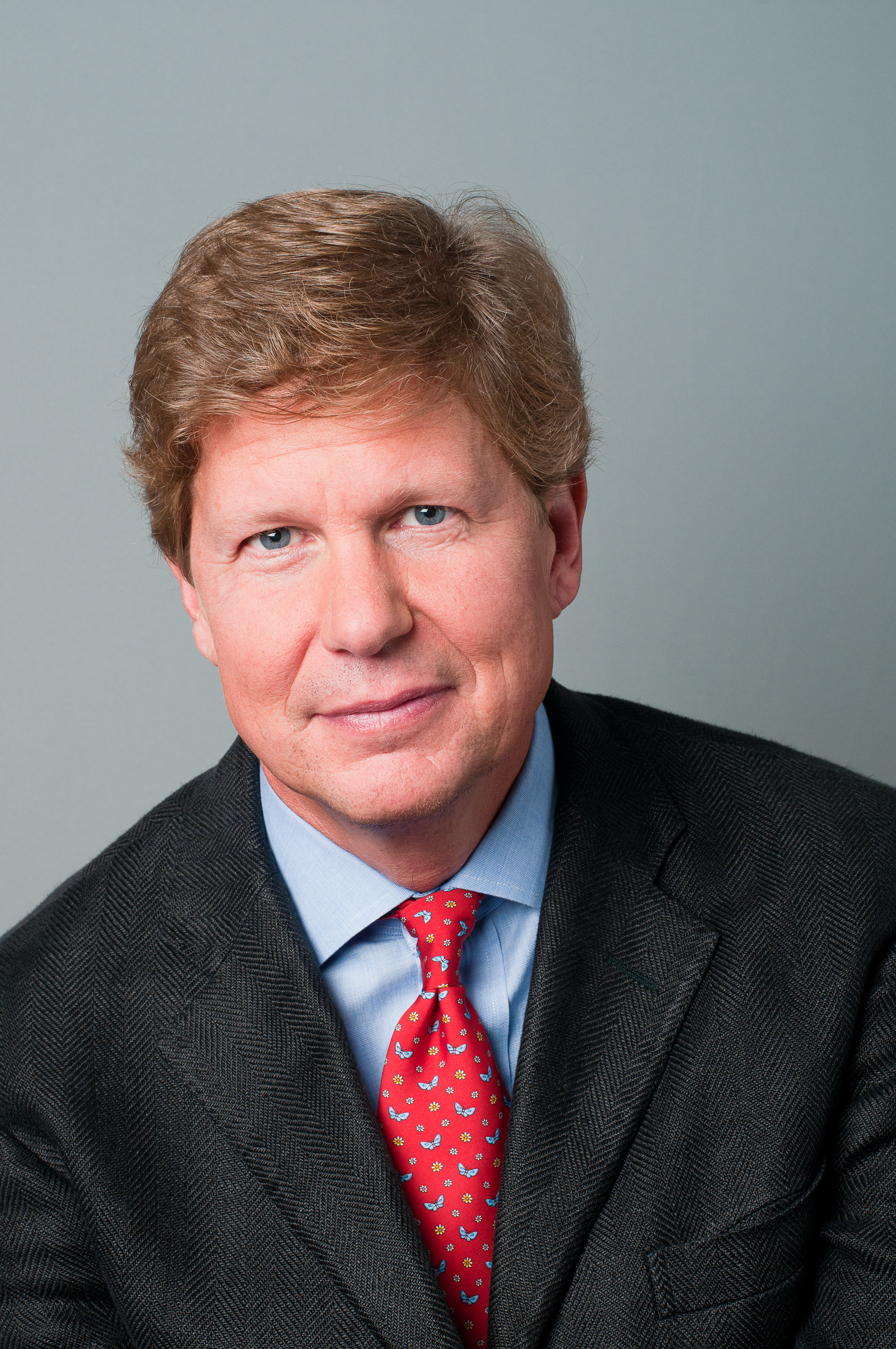 [7]Randall Balmer, an Episcopal priest, is
Professor of American Religious History at Columbia University and the author,
most recently, of The Making
of Evangelicalism: From Revivalism to Politics and Beyond. [8]
[7]Randall Balmer, an Episcopal priest, is
Professor of American Religious History at Columbia University and the author,
most recently, of The Making
of Evangelicalism: From Revivalism to Politics and Beyond. [8]
Subscribe to:
Posts (Atom)